
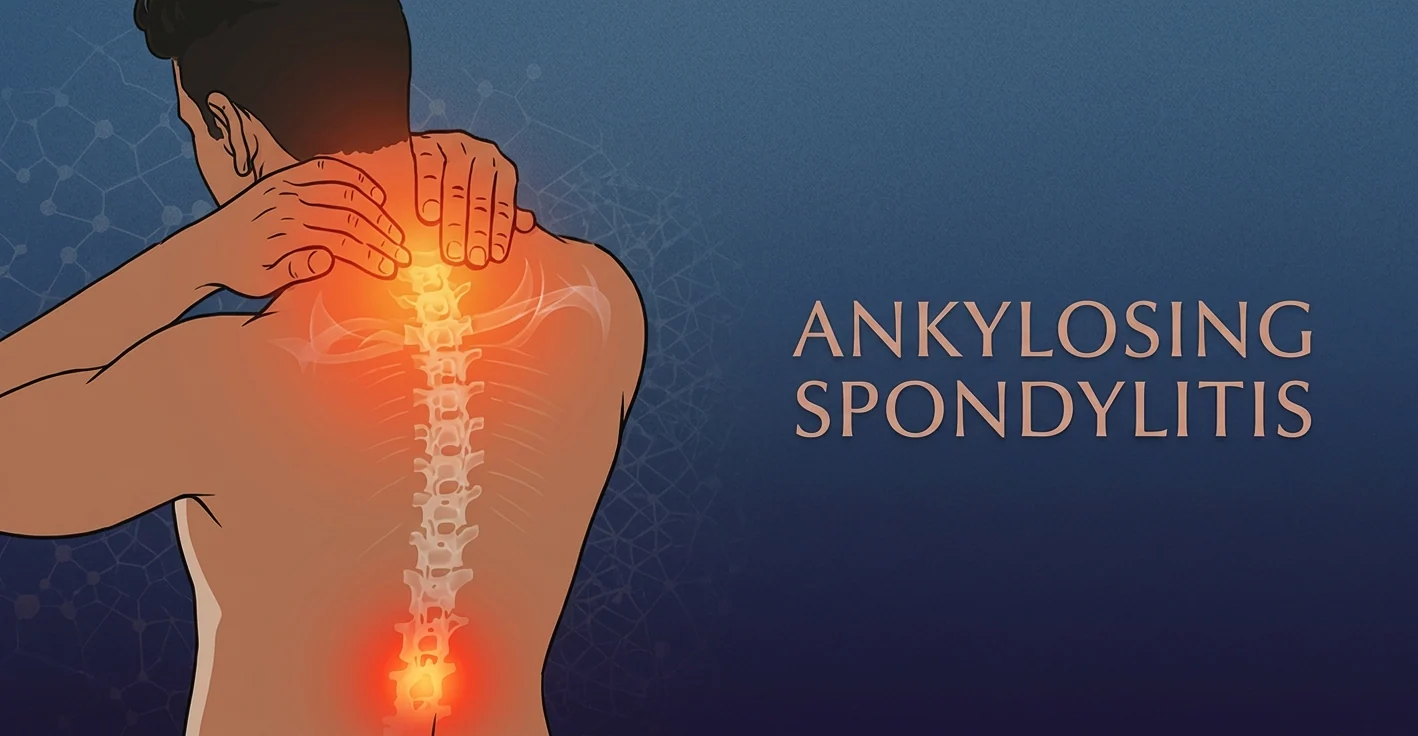
What is Ankylosing Spondylitis?
Ankylosing Spondylitis is a type of inflammatory arthritis that mainly affects the spine. The disease causes inflammation of the joints and ligaments of the spine, leading to pain and stiffness.
Over time, chronic inflammation can cause some spinal bones to fuse together, making the spine less flexible and affecting posture.
In addition to the spine, Ankylosing Spondylitis may also affect:
- Hips
- Shoulders
- Knees
- Ribs
- Eyes
- Heart
- Lungs
Therefore, early diagnosis and treatment are essential to prevent permanent damage and maintain mobility.
Symptoms of Ankylosing Spondylitis
The symptoms usually develop gradually and often begin in early adulthood.
Common Symptoms Include:
- Chronic lower back pain
- Morning stiffness lasting more than 30 minutes
- Pain that improves with exercise
- Pain that worsens with rest
- Hip pain and stiffness
- Neck pain
- Fatigue and weakness
- Reduced flexibility of the spine
- Difficulty standing upright
Advanced Symptoms of Ankylosing Spondylitis
As the disease progresses, patients may experience:
- Stooped posture
- Difficulty taking deep breaths
- Joint swelling
- Limited spinal movement
- Difficulty performing daily activities
- Persistent fatigue
Extra-Articular Symptoms of Ankylosing Spondylitis
Ankylosing Spondylitis can also affect other parts of the body.
Eye Inflammation (Uveitis)
- Eye pain
- Redness
- Blurred vision
- Sensitivity to light
Heart Problems
- Irregular heartbeat
- Inflammation of the aorta
Lung Complications
- Reduced chest expansion
- Breathing difficulties
Digestive Problems
Some patients may develop inflammatory bowel disease.
Causes of Ankylosing Spondylitis
The exact cause of Ankylosing Spondylitis remains unknown. However, several factors contribute to its development.
Genetic Factors
The HLA-B27 gene is strongly associated with Ankylosing Spondylitis.
Immune System Dysfunction
The immune system mistakenly attacks healthy joints and tissues, causing inflammation.
Family History
Having a close family member with Ankylosing Spondylitis increases the risk of developing the condition.
Diagnosis of Ankylosing Spondylitis in Nagpur
At Mauli Arthritis and Rheumatology Clinic, we perform a detailed evaluation to diagnose Ankylosing Spondylitis accurately.
Medical History and Physical Examination
Our rheumatologist evaluates your symptoms, spinal movement, posture, and joint function.
Blood Tests
Blood tests may include:
- HLA-B27 Test
- ESR (Erythrocyte Sedimentation Rate)
- CRP (C-Reactive Protein)
Imaging Studies
X-rays
X-rays help identify damage in the sacroiliac joints and spine.
MRI Scan
MRI can detect early inflammation even before changes appear on X-rays.
Early diagnosis through MRI helps initiate treatment before permanent damage occurs.
Ankylosing Spondylitis Treatment in Nagpur
- Although there is no permanent cure for Ankylosing Spondylitis, proper treatment can effectively control symptoms and slow disease progression.
- At Mauli Arthritis and Rheumatology Clinic, treatment plans are personalized according to the severity of the disease.
- Medications
- Non-Steroidal Anti-Inflammatory Drugs (NSAIDs)
- Help reduce pain and inflammation.
- Improve mobility and stiffness.
- Disease-Modifying Anti-Rheumatic Drugs (DMARDs)
- Help control inflammation in peripheral joints.
- Reduce joint damage and improve function.
- Biologic Therapy
- Targets specific parts of the immune system.
- Significantly improves symptoms in patients with active disease.
- Helps slow disease progression and improve quality of life.
- Corticosteroids
- Steroid injections may provide temporary relief in selected cases.
- Help reduce severe inflammation and joint pain.
- Non-Steroidal Anti-Inflammatory Drugs (NSAIDs)
Physiotherapy for Ankylosing Spondylitis
Physical therapy plays a crucial role in managing Ankylosing Spondylitis.
Benefits include:
- Improved posture
- Increased flexibility
- Better spinal mobility
- Reduced stiffness
- Improved breathing capacity
- Enhanced quality of life
Regular stretching and strengthening exercises are essential for long-term management.
Lifestyle Tips for Ankylosing Spondylitis
Without proper treatment, psoriatic arthritis can cause:
- Permanent joint damage
- Joint deformities
- Chronic pain
- Reduced mobility
- Eye inflammation
- Cardiovascular problems
- Emotional stress and depression
Therefore, seeking early medical care remains essential.
When Should You Consult a Rheumatologist?
Consult a rheumatologist if you experience:
- Chronic lower back pain for more than three months
- Morning stiffness lasting longer than 30 minutes
- Back pain that improves with exercise
- Persistent joint pain and swelling
- Recurrent eye inflammation
- Difficulty standing straight
Early diagnosis and treatment can significantly slow disease progression and prevent complications.