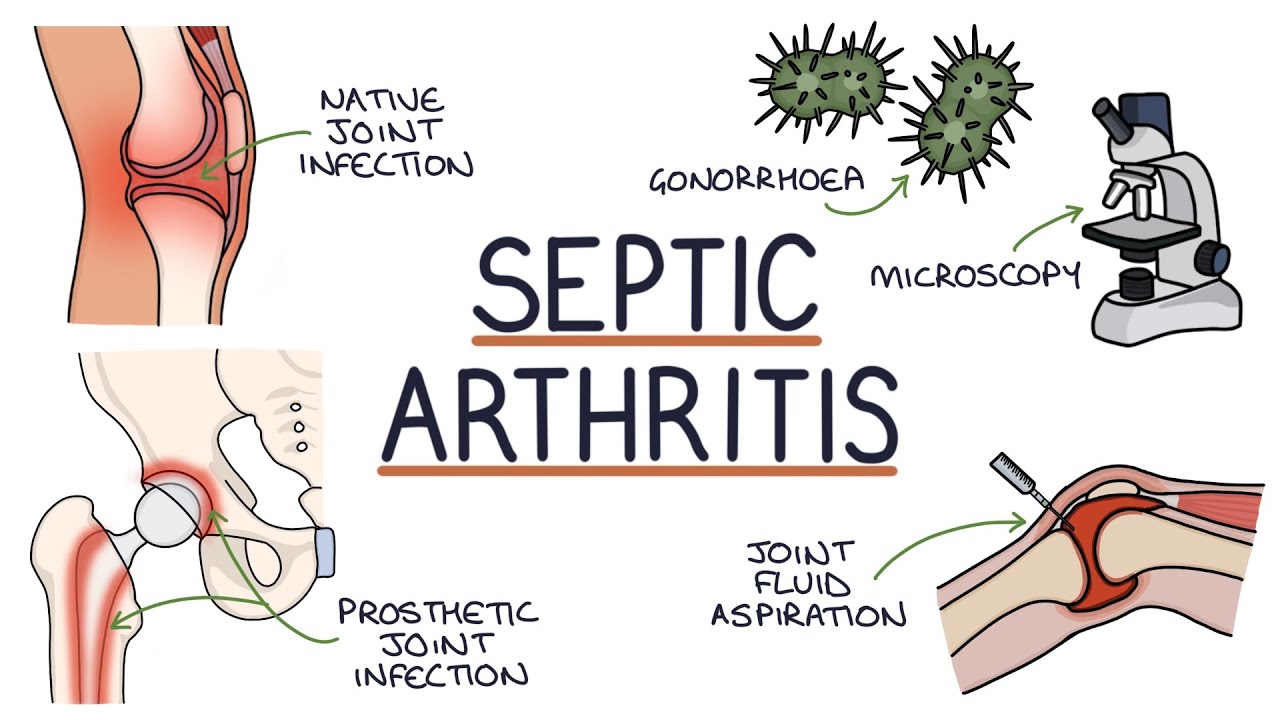
What is Septic Arthritis?
Commonly Affected Joints
Septic arthritis can affect any joint in the body. However, the most commonly involved joints include:
- Knee
- Hip
- Shoulder
- Ankle
- Wrist
- Elbow
Children and older adults are at a higher risk of developing septic arthritis.
Symptoms of Septic Arthritis
Symptoms usually develop suddenly and worsen rapidly.
Common Symptoms Include:
- Severe joint pain
- Joint swelling
- Redness around the joint
- Warmth over the affected joint
- Difficulty moving the joint
- Fever and chills
- Fatigue and weakness
- Inability to bear weight on the affected joint
In infants and young children, symptoms may include irritability, crying during movement, and refusal to walk.
Causes of Septic Arthritis
Septic arthritis develops when microorganisms enter the joint through the bloodstream or directly through an injury or surgery.
Bacterial Infections
Bacteria are the most common cause of septic arthritis. Common bacteria include:
- Staphylococcus aureus
- Streptococcus species
- Gonococcal bacteria
Viral Infections
Certain viral infections can occasionally cause joint inflammation.
Fungal Infections
Although rare, fungal infections can lead to septic arthritis, particularly in individuals with weakened immune systems.
How Does Infection Reach the Joint?
The infection can spread through:
- Bloodstream infections
- Skin infections
- Joint injuries
- Recent surgery
- Animal bites
- Contaminated injections
Diagnosis of Septic Arthritis in Nagpur
At Mauli Arthritis and Rheumatology Clinic, we perform a detailed evaluation to diagnose septic arthritis quickly and accurately.
Medical History and Physical Examination
Our rheumatologist evaluates:
- Joint pain and swelling
- Fever and infection symptoms
- Medical history and risk factors
Blood Tests
Blood tests may include:
- Complete Blood Count (CBC)
- ESR (Erythrocyte Sedimentation Rate)
- C-Reactive Protein (CRP)
- Blood cultures
These tests help identify infection and inflammation.
Joint Fluid Analysis
A sample of fluid is removed from the affected joint and examined for:
- Bacteria
- White blood cells
- Crystals
- Culture and sensitivity testing
Joint aspiration is one of the most important tests for diagnosing septic arthritis.
Imaging Studies
The doctor may recommend:
- X-rays
- Ultrasound
- MRI scans
These tests help assess joint damage and identify complications.
Septic Arthritis Treatment in Nagpur
Septic arthritis requires immediate treatment to prevent permanent joint damage.
At Mauli Arthritis and Rheumatology Clinic, treatment is individualized according to the severity of the infection and the affected joint.
Antibiotic Therapy
Antibiotics are the primary treatment for bacterial septic arthritis. Treatment usually begins immediately after diagnosis.
Joint Drainage
Removing infected fluid from the joint helps reduce pain, pressure, and inflammation.
Joint drainage may be performed through:
- Needle aspiration
- Arthroscopy
- Surgical drainage
Pain Management
Medications help reduce pain and improve comfort during recovery.
Physical Therapy
After the infection is controlled, physiotherapy helps restore:
- Joint movement
- Muscle strength
- Flexibility
- Function
Prevention of Septic Arthritis
You can reduce your risk by:
- Treating infections promptly
- Maintaining good hygiene
- Proper wound care
- Managing chronic medical conditions
- Seeking treatment for skin infections
- Following medical advice after joint surgery